 What are the biggest political misjudgements? Paul Linford has listed his top 10 in a very good post, all of which make sense - bar one. The political misjudgement that he lists as the second biggest is actually the utter opposite. Paul says:
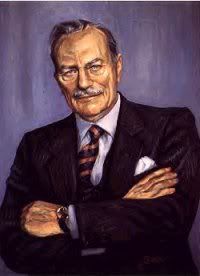
2. Enoch Powell playing the race card, 1968
What happened: Enoch Powell, spiritual leader of the Tory Right, makes a speech about immigration prophesying that the streets of Britain will soon be "foaming with much blood." He is immediately sacked from the frontbench by Ted Heath and becomes a peripheral figure on the margins of British politics, eventually joining the Ulster Unionists.
What might have happened: After distinguished service as Defence Secretary in the 1970-74 Heath government, Powell successfully challenges Heath for the leadership in 1975 after his two election defeats. Using his supreme oratorical skills to destroy Jim Callaghan at the Despatch Box in the late 70s, he becomes Prime Minister in 1979 at the age of 66, serving for one term before handing over to his faithful protege, Margaret Thatcher.
Unfortunately, Paul has got it wrong. Completely and utterly wrong. Enoch's "Rivers of Blood" speech was the very reason he could ever have been elected leader of the Conservative Party and Prime Minister, not the reason he wasn't.What happened: Enoch Powell, spiritual leader of the Tory Right, makes a speech about immigration prophesying that the streets of Britain will soon be "foaming with much blood." He is immediately sacked from the frontbench by Ted Heath and becomes a peripheral figure on the margins of British politics, eventually joining the Ulster Unionists.
What might have happened: After distinguished service as Defence Secretary in the 1970-74 Heath government, Powell successfully challenges Heath for the leadership in 1975 after his two election defeats. Using his supreme oratorical skills to destroy Jim Callaghan at the Despatch Box in the late 70s, he becomes Prime Minister in 1979 at the age of 66, serving for one term before handing over to his faithful protege, Margaret Thatcher.
Until he made that speech, in any leadership election he would have been nothing more than an also-ran - just like he had been in 1965, when Edward Heath was elected Conservative leader, and Powell polled just 5% of the vote, with just 15 votes. It was after his infamous speech that Powell's reputation with the people and his profile began to rise. It was precisely because of the speech for which he was widely criticised, but ultimately vindicated by shifts policy shifts across all parties, that he became well known.
Before 20 April 1968, Enoch was nothing more than just another mid-level politician - generally regarded quite well, but nothing more. After his speech and the reactions he got, that all changed. He rose in the opinion polls personally and as a potential leadership candidate should Heath step down, becoming far more well known and liked than others of his party.
But then Enoch made his big misjudgement - he stepped down as the MP for Wolverhampton South West at the February 1974 general election, and called for the electorate to vote Labour instead [primarily because the Tories had taken Britain in the EEC and Labour promised a referendum on the issue - at least they gave one that time]. That election ended with a hung parliament with Labour the largest party, and was followed by Labour winning a Commons majority of 3 in October of the same year.
Had Enoch remained a Conservative MP in February 1974, it is very likely that he would have been asked to replace Heath as leader, and is unlikely to have faced any opposition for the position. The last part of Paul's "what might have happened" could have. But without making his "Rivers of Blood" speech - the very speech which Paul considers to have been Enoch's political misjudgement - he would never have been any more than an also-ran in any leadership race. That speech in 1968 was the one thing that could have led him to be Prime Minister, not the one thing that stopped him. That distinction undoubtedly goes to his decision is stand down as a Conservative MP in February 1974.